Troubleshooting a Drone That Drifts Sideways in Crosswinds
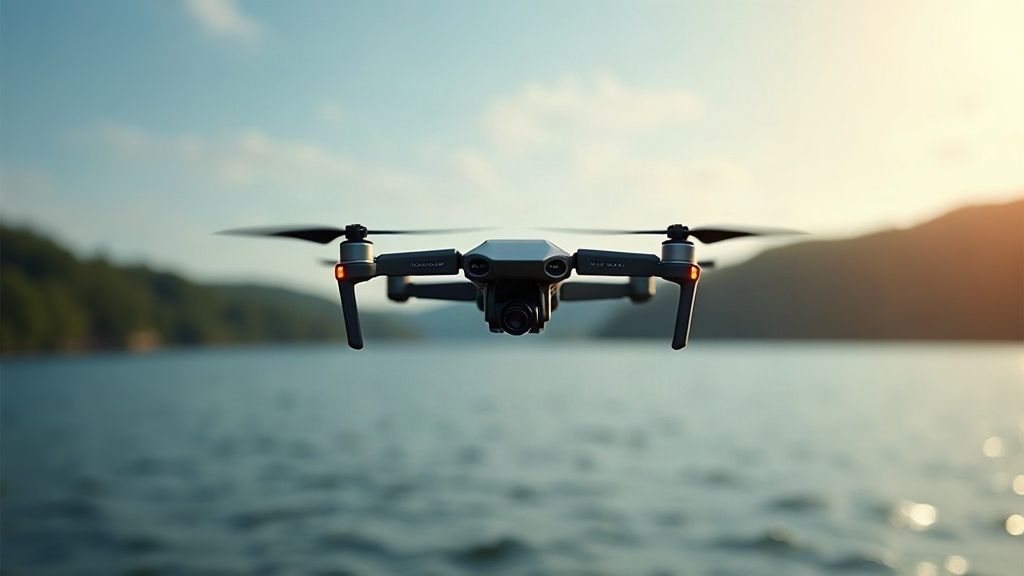
If your drone keeps sliding sideways while you’re flying over a lake in a steady crosswind, don’t assume a part is broken. Nine times out of ten it’s a combination of three things: GPS signal getting scrambled by water reflections, compass interference, and wind compensation that just isn’t dialed in correctly. Here’s how to actually track down the cause and fix it, so you can get back to flying over open water without white-knuckling the controller.
Why Drones Drift Sideways Over Water Specifically
Water does things to your drone’s sensors that dry land simply doesn’t.
- GPS multipath reflection: The lake surface bounces satellite signals back up at odd angles, so your drone’s GNSS module ends up receiving delayed or duplicated copies of the same signal. The flight controller gets confused about where it actually is, starts “hunting” for its true position, and that hunting shows up as drift.
- No visual reference for optical flow: A lot of drones lean on downward cameras and sensors to hold position at low altitude. Problem is, water offers nothing to lock onto, it’s flat, shiny, and constantly shifting. The optical flow system basically throws its hands up, and you get erratic corrections instead of smooth ones.
- Magnetic interference near the shoreline: Docks, boat hulls, rebar buried in a nearby boat ramp, even old pipes under the water, can all throw off your compass heading. Once the flight controller misreads orientation, it starts compensating for wind incorrectly.
- Temperature and humidity shifts: Air sitting over a lake tends to run cooler and denser than air over land nearby. That changes motor response and drag just enough that your drone’s wind-compensation algorithm, tuned for “average” conditions, doesn’t quite keep up.
Step 1: Rule Out Pilot-Side Wind Misjudgment
Before you touch a single setting, make sure this isn’t just wind beating your drone’s correction authority, plain and simple.
- Check wind speed at altitude, not at ground level. Crosswinds 50 to 100 feet up can run noticeably harder than whatever you’re feeling standing on the shore.
- Look up your drone’s rated max wind resistance (it’s in the manual, often somewhere around 22 to 27 mph for consumer quadcopters) and compare it to the actual gusts you’re dealing with.
- If gusts are blowing past that rated number, drift isn’t a malfunction. It’s physics doing exactly what physics does.
Step 2: Recalibrate Compass and IMU Away From Water
Do this on dry land, well clear of metal objects, cars, and at least 30 feet back from the shoreline:
- Power on the drone and enter compass calibration mode (usually that figure-eight rotation dance you do with the whole aircraft).
- Rotate slowly and completely through both horizontal and vertical axes as the app or controller prompts you.
- Recalibrate the IMU (accelerometer and gyroscope) on a surface that’s actually level, not just “looks level.”
- Stay away from your car, belt buckle, phone, or any dock hardware while calibrating. All of them throw magnetic noise into the reading.
A slightly skewed compass calibration is one of the sneakiest, most common causes of drift that always pulls in one direction. It shows up a lot right after a long drive, or after the drone’s been stored next to metal gear in a case.
Step 3: Switch GPS/Positioning Modes Correctly
- Turn on GPS + GLONASS + Galileo multi-constellation mode if your drone supports it. This spreads the positioning load across multiple satellite systems instead of relying on one that’s getting weakened by water reflection.
- Turn off vision positioning/optical flow when flying over water at altitude. Featureless water doesn’t help stabilization here, it actively makes it worse.
- Wait for a solid GPS lock before takeoff, ideally 12+ satellites with low HDOP. Launching with a shaky lock means drift is baked into the flight before you even leave the ground.
Step 4: Adjust Flight Parameters
- Nudge up the wind compensation gain or attitude/rate PID values if your flight controller software allows manual tuning (DJI, Autel, and open-source firmware like ArduPilot or Betaflight all offer this to varying degrees).
- Set a higher RTH (Return to Home) altitude over water, so the drone stays above the turbulent, choppy air that sits right near the surface.
- Trim the drone in a hover test over land first. If it still drifts sideways in calm air, that’s not wind, that’s a trim issue or a motor imbalance.
Step 5: Inspect Hardware for Imbalance
If the drift shows up even in light wind, the problem may not be about water or GPS at all:
- Check the propellers for hairline cracks, warping, or uneven wear. One damaged blade alone can produce a steady lateral pull.
- Make sure motor mounts are torqued down properly. A loose motor shifts its thrust vector under load, and that shift reads as drift.
- Check that the gimbal and camera aren’t unbalanced. An off-center gimbal shifts the aircraft’s center of gravity during banking corrections, which can masquerade as wind drift.
When to Just Avoid the Flight
Some conditions just aren’t fixable with a settings tweak:
- Gusty, inconsistent crosswinds (as opposed to steady, predictable ones) overwhelm most consumer-grade stabilization no matter how well it’s tuned.
- Open water with no windbreak lets gusts build up far more than they would over land nearby.
- If your drone only supports basic GPS without GLONASS or Galileo backup, flying over water in winds above 15 mph is genuinely risky territory for a drift-related loss.
Conclusion
Sideways drift over a lake in a steady crosswind almost always comes down to the same handful of culprits: GPS multipath confusion, a compass that needs recalibrating, or optical flow sensors struggling with featureless water, all made worse once wind climbs past what your drone is actually rated for. Recalibrate on dry land, away from anything metal. Turn on multi-constellation GPS. Turn off vision positioning before you fly over the lake. Check your hardware for imbalance before you pin the blame entirely on wind. Get those four things right, and most drones go right back to flying steady and predictable, crosswind or not.