How to Retrieve a Drone Stuck in a Pine Tree Without Snapping Props
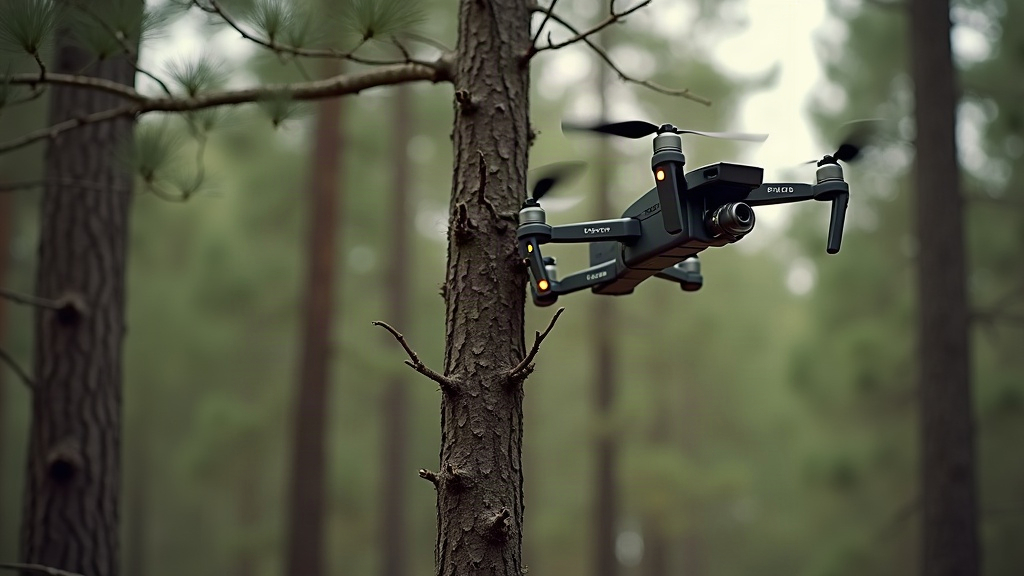
Getting a drone stuck in a pine tree ranks right up there with the most common headaches pilots face, rookies and veterans alike. The good news? Most of these drones come down in one piece, as long as you don’t start yanking branches or scrambling up the trunk like you’re late for something. This guide covers the methods that actually work: ways to get your bird back on the ground without snapping a prop, bending an arm, or trashing the gimbal.
Why Pine Trees Are Especially Tricky
Pines aren’t like your typical oak or maple when it comes to drone retrieval. A few reasons why:
- Dense needle clusters bury the drone from view, so you’re often guessing at its exact position rather than seeing it clearly.
- Flexible branches shift without warning. Nudge the wrong one and the drone can drop several feet in an instant.
- Sticky sap gets on everything: props, landing gear, your hands. It turns a clean recovery into a sticky mess.
- Sharp dead branches lower down can gouge or puncture the shell if the drone falls through them.
Take a breath before you do anything. Shaking the trunk out of frustration is probably the single biggest cause of snapped props and cracked arms, more than the fall itself.
Step 1: Assess Before You Act
- Mark the GPS location right away using your flight app’s last-known-position feature. You’d be surprised how hard a tree looks the same from thirty feet away ten minutes later.
- Walk a full circle around the tree. Viewing the drone from different angles often shows it’s sitting lower, or easier to reach, than your first glance suggested.
- Check if the props are still spinning. If the motors are armed, disarm from the controller immediately. A spinning prop at head height is no joke.
- Estimate the height. Under 10-12 feet, you can usually handle it yourself. Anything taller starts calling for specialized gear, or someone else’s help entirely.
Method 1: The Long Pole Push Technique
If the drone’s sitting in lower or mid-level branches, say under 20 feet, a telescoping pole is your first and safest bet.
- Stick to a non-conductive fiberglass or wood pole. Skip metal altogether, especially if there’s any chance of nearby power lines.
- Pad the tip with something soft: a pool noodle, foam block, even a tennis ball works. You want to cushion contact, not add new scratches.
- Push against the branch the drone rests on, not the drone itself. This lets it slide down in a controlled way instead of dropping straight through the canopy.
- Lay a tarp or old blanket underneath first. Even a soft landing beats landing on gravel or roots.
Method 2: The Weighted Rope Toss
When the branches are too high or too thin to reach with a pole, try this instead:
- Tie a small weighted sack (a handful of sand or rice works fine) to a lightweight rope.
- Toss the rope over a sturdy branch above the drone, never the one it’s actually resting on.
- Pull side to side, gently, to create a vibration that shakes loose needles and nudges the drone free without sending it into a sudden freefall.
- Resist the urge to yank hard. That one aggressive pull is usually what cracks an arm or shatters a prop, not the stuck branch itself.
Method 3: The Second Drone Rescue (for high branches)
More pilots are turning to this trick lately: using a spare drone to free the stuck one.
- Hover the backup drone close to the trapped unit and let the prop wash (that downward blast of air) rattle the branches loose.
- Keep at least 3 feet between the two drones. Closer than that and you risk the props tangling, which turns one stuck drone into two.
- Pine trees actually respond well to this method since the needle clusters move easily with airflow, unlike the thicker leaves of deciduous trees.
Method 4: Call a Professional Tree Climber or Arborist
Once you’re looking at 25-30 feet or more, it’s just not worth risking a fall. Local arborists typically charge $30-$75 for a drone retrieval, and plenty of drone hobbyist Facebook groups and forums keep running lists of climbers who’ve done this before and know what they’re doing.
What NOT to Do
- Don’t shake the trunk violently. Pine wood flexes less than oak or maple, so instead of absorbing the shake, it tends to just drop the drone outright.
- Don’t climb without proper gear. Pine bark is brittle, and branches that look solid can snap the second you put weight on them.
- Don’t throw rocks or sticks at it. This is probably the number one cause of cracked shells and busted gimbals that we see reported.
- Don’t send a second drone in recklessly hoping to “bump” the first one free. Without padding or real control over the approach, you’re just as likely to lose two drones instead of one.
After Retrieval: Inspection Checklist
Got it down? Don’t just power it up and fly off. Check these first:
- Props, even for hairline cracks. If you spot any damage, however minor, replace them. A compromised prop causes vibration, and vibration causes crashes.
- Arms, looking for flex or that telltale white stress marking in the plastic.
- Gimbal, making sure it moves freely through all its axes without catching.
- Battery compartment and connectors, checking for sap residue. Left alone, sap can corrode the contacts over time. A little isopropyl alcohol and a gentle wipe takes care of it.
Conclusion
A drone caught in a pine tree isn’t a lost cause, not by a long shot. Patience, a few low-tech tools, and a methodical approach (whether that’s pole pushing, a weighted rope, or prop wash from a backup drone) bring most of these aircraft down fully intact. And when the height or the angle makes a DIY rescue too risky, a quick call to a local arborist costs a lot less than a replacement drone. Slow and deliberate wins over brute force, pretty much every time.