Flying a Cinewhoop Through a Barn During Lambing Season Safely
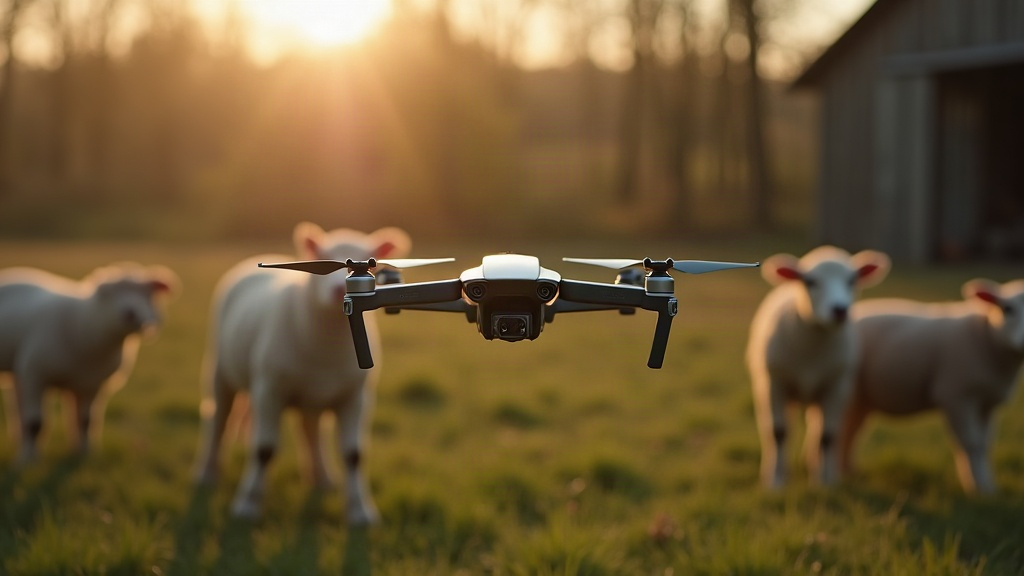
Why Cinewhoops Are Ideal for Barn Interiors
A cinewhoop’s ducted props make it the safest category of FPV drone for tight, cluttered spaces like a historic barn. Compared to a bare-frame racing quad, the shrouds do three things well:
- Protect exposed propellers from clipping low beams, hay bales, or pen rails
- Reduce the odds of a blade strike against an animal or a handler’s arm
- Soften the acoustic signature slightly, which matters more than most people assume during lambing
Models in the 3-inch class (the iFlight Defender or BetaFPV Pavo series, for example) hit a sweet spot. Enough thrust to glide past support posts without wobbling, light enough that you can actually stop in time if you misjudge a gap.
Lambing Season Changes the Rules
Lambing season is not the time to treat a barn like an empty set. Ewes close to term, and new mothers especially, are wired to react to sudden movement and unfamiliar sound. You’re not just flying around furniture anymore.
Noise Is the Real Risk, Not Just the Drone Itself
A cinewhoop at full throttle puts out a mid-frequency whine that livestock have never heard before. Sheep spook easily, and a startled ewe can:
- Trample a lamb while bolting for the far wall
- Refuse to let a lamb nurse afterward, thanks to a spike in stress hormones
- Injure herself slamming into pen rails
Practical fix: fly reduced throttle curves on your first pass (soften expo, cap max power in the flight controller). Let the flock get used to the sound from a distance before you bring the quad in close.
Timing the Flight
- Avoid flying within the first 24 to 48 hours after a ewe lambs. Bonding is fragile in that window.
- Early morning, right after feeding, is lower-risk than the stretch just before feeding time when everyone’s already restless.
- Never fly during an active birth. Just pause, land, and wait it out.
Barn-Specific Hazards to Scout First
Old barns come with their own obstacle course, and it’s rarely symmetrical:
- Low, hand-hewn beams. Height varies wildly compared to a modern truss. Walk the route with a tape measure before you ever fly it in goggles.
- Loose hay and dust. Prop wash kicks it up fast, and it’ll irritate your lens as much as the animals’ eyes.
- Old wiring and cobwebs. Still a snag hazard even with ducted props.
- Uneven floors. They throw off your sense of line and height for low orbit shots near the pens.
Do a slow walk-through with a flashlight first, note every pinch point, and only then think about arming the quad.
Suggested Flight Plan
- Pre-flight scout on foot. Map beams, pens, exits, anything sticking out.
- Static hover test outside the barn door. Confirm props, battery, and VTX link are clean before you commit to the interior.
- Slow entry at low throttle, through the largest opening available, not some tight gap you think you can thread.
- One continuous line, no hovering near pens. A hover sustains the noise far longer than a quick pass ever will.
- Exit the way you came in. Don’t improvise a new route under beams you haven’t measured.
Gear Checklist
- 3-inch cinewhoop, full prop ducts, no exposed blades
- Soft rubber or foam prop guards, doubled up if you’re flying under a meter from animals
- HD digital FPV system, since dim barn light makes obstacle judgment harder than it sounds
- Spare batteries. Don’t push a low-voltage pack through a tight beam gap and hope for the best
- A spotter near the livestock calling out distress signs in real time, not watching the monitor with you
When Not to Fly
If any ewe is breathing hard, isolating herself, or a lamb is down, cancel. Full stop. No shot is worth compromising a difficult birth. The barn isn’t going anywhere, and neither is next week’s quiet morning.
Conclusion
Flying a cinewhoop through a historic barn during lambing season is doable, and it can produce some genuinely beautiful, intimate agricultural footage. But only if you put the animals’ stress levels ahead of the shot list. Scout on foot, fly at reduced throttle, keep the flights short and direct, and have a human spotter watching the flock instead of the screen. Respect the barn’s hazards and the ewes’ instincts, and you’ll walk away with footage that’s safe to get and genuinely worth watching.